Flint’s Fight Against Non-Structural Blight: Cleaner, Greener, Safer Neighborhoods
It was a question the late Flint City Councilman Quincy Murphy had grappled with for years, first as a resident and later as an elected representative of Flint: Tearing down blighted houses and commercial buildings is much needed, but what can we do about the non-structural blight?
Unlike structural blight, which involves abandoned or deteriorating buildings, the term non-structural blight refers to properties that are unsafe or harmful to neighborhoods due to neglect. Common examples include overgrown grass, invasive species, discarded household items, and illegal dumping.
For decades, many of Flint’s surplus of vacant lots have been plagued by non-structural blight. These conditions not only create eyesores but also foster safety concerns and environmental harm.
Sparked by Councilman Murphy’s query, the Ruth Mott Foundation convened many local partners to collaboratively address the issue of non-structural blight. From these convenings, the Flint Non-Structural Blight Work Group eventually formed and included representatives from the City of Flint, Crime Stoppers of Flint & Genesee County, Genesee Conservation District, Genesee County Land Bank Authority, and Neighborhood Engagement Hub.
The Foundation awarded $30,000 to the Center for Community Progress in 2023 to provide the group with technical assistance and coordinate an extensive review and analysis of data and existing policies to serve as the basis for a comprehensive, long-term strategy for addressing non-structural blight and stewarding vacant lots in Flint. The funds were awarded under the Foundation’s Public Safety program area, which was voiced by Flint residents as a priority for funding support.
Over 10 meetings of collaborative discussions, the work group laid the groundwork for addressing the ongoing and significant issue voiced by residents of deteriorating non-structural property in Flint. A memo outlining strategies for better coordination and stewardship of vacant land was released by the Center in March 2024.
From these discussions, the “Cleaner. Greener. Safer.” campaign launched in 2025. The campaign was designed to coordinate existing programs and resources, encourage community participation, and promote sustainable land care. Its activities ranged from billboards and public service announcements to neighborhood cleanups and expanded use of existing tools such as Crime Stoppers reporting, Land Bank Clean & Green lot maintenance, Conservation District’s invasive species and urban forestry management, and the Neighborhood Engagement Hub’s tool lending library.
“The residents of Flint deserve clean, beautiful places to live, work, and play,” said Melissa Hertlein with the Genesee County Land Bank. “All of us were already tackling this problem individually in a variety of different ways. Together, we will find strategic, comprehensive solutions to better address non-structural blight to create healthy and safe green spaces for residents to enjoy.”
Building on the efforts of the Flint Non-Structural Blight Work Group, the Genesee Conservation District applied for and was awarded funds for a key initiative of the “Cleaner. Greener. Safer.” campaign. The Industrial Environmental Impact (IEI) Project, which was named by neighborhood residents, transformed 42 vacant lots in north Flint with $250,000 from the Consumers Energy Foundation’s Planet Award and $15,000 from The Conservation Fund.
The three-year project began by identifying a Flint neighborhood with 40-50 publicly-owned mostly contiguous lots, surveying the lots for viable trees and invasive species, and engaging the surrounding community. Cleanup and invasive species treatments began in summer 2024, and tree planting took place the following spring, with staff and volunteers leading the effort.
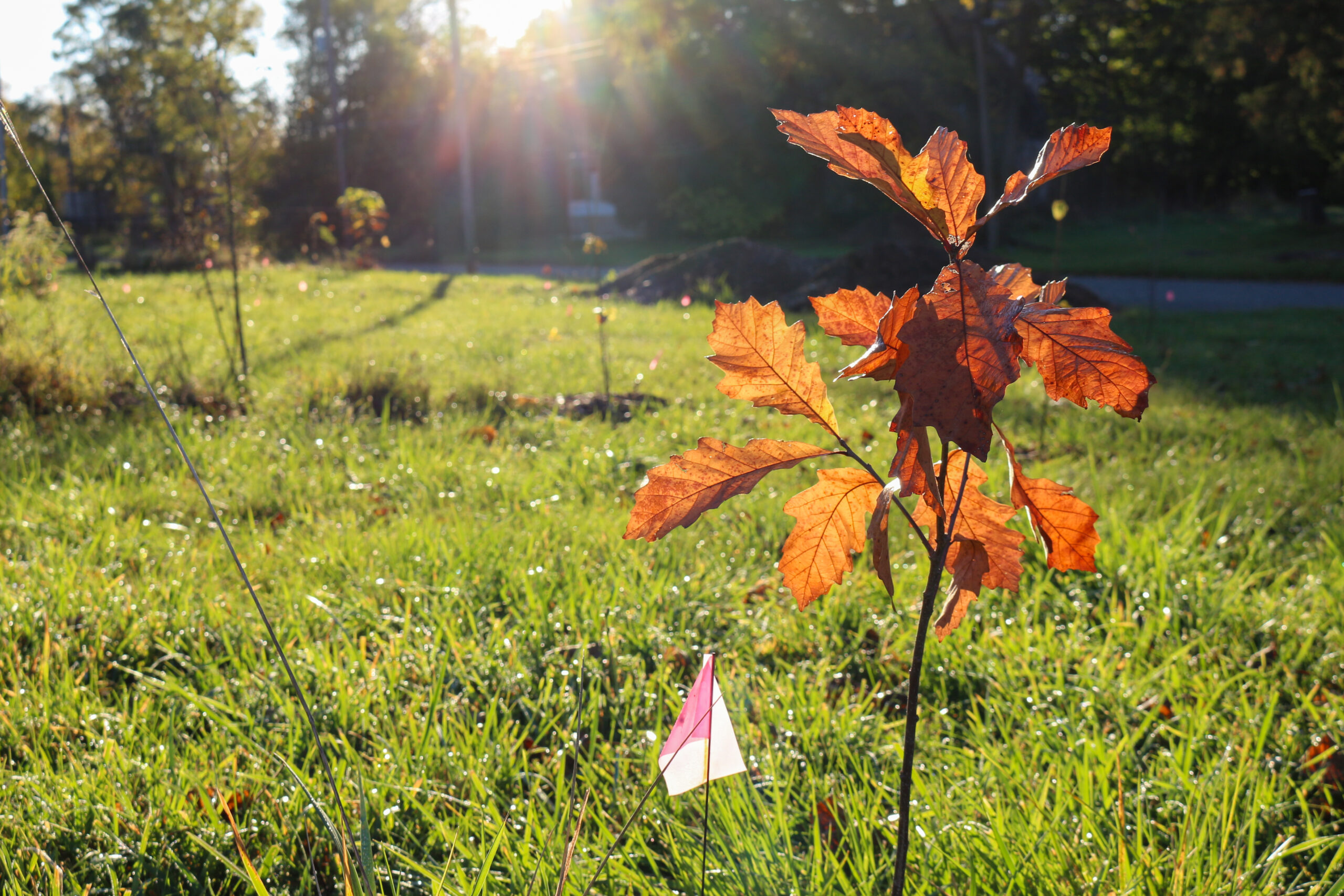
The Conservation District removed blighted elements such as dead trees, invasive species, and debris before planting 1,600 native Michigan trees. The trees were densely clustered to shade out grass, prevent invasive regrowth, and reduce long-term maintenance. Follow-up invasive species treatments, tree establishment, overall maintenance, and old fence removals continued through the 2025 growing season. Drawing on the principles of Crime Prevention Through Environmental Design, the trees were also intentionally planted to maintain clear sightlines from the street to help with neighborhood safety.
“This project leans into things the work group organizations focus on. So for us with the Conservation District – the trees, good land management, invasive species treatment, and addressing neighborhood climate resilience,” said Karri Tomich-Baylis, project manager with the Genesee Conservation District. “The project is taking place on Land Bank and City of Flint land, we’ve implemented Crime Stoppers principles of crime prevention, and we’ve advertised resources available to the community from all of our organizations.”
Once complete, the revitalized lots will return to the City of Flint and the Land Bank for adoption, while volunteers help maintain them in the interim. The IEI Project is located in the late Councilman Murphy’s ward, and reflects his vision of turning neglected land into community assets.
Through collaboration, resident engagement, and innovative land management, the Flint Non-Structural Blight Work Group established a framework and precedent for addressing non-structural blight that can be replicated elsewhere.
For more information on the “Cleaner. Greener. Safer.” campaign, visit thelandbank.org/cgs.asp.
To learn about the Industrial Environmental Impact Project, visit geneseecd.org/ourprojects.